2025 will be remembered as the year our building got hit and technology fully transitioned from being an enabler to being a driver of all major business decisions. Here’s a look at the biggest shifts and trends that defined the IT landscape this year.
Our Building Got Hit (Ouch)
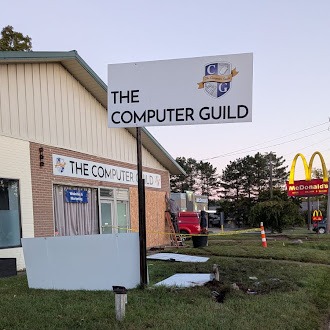
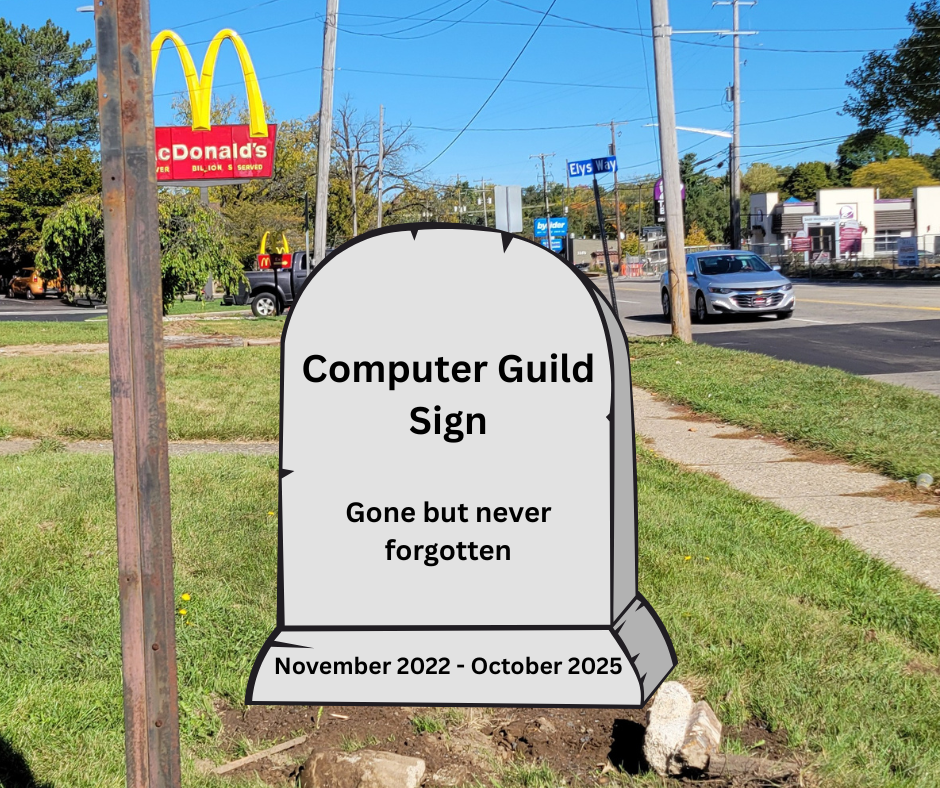
We were all set to celebrate three years in our building when one early October morning, we received news that the building had been hit by a drunk driver. While our building got patched up and the remaining part of our sign (RIP) was removed, we were able to continue operating like normal. Naturally, we found the humor in the situation and made it the star of our social media content. Rest assured, no one was hurt, and we are working on getting the building fixed and a new sign. In the meantime, make sure to follow us on social media for updates and jokes.


The AI Revolution: Agentic Systems and Enterprise Scale
Artificial Intelligence was, without a doubt, the dominant narrative of 2025. While previous years focused on the introduction of Generative AI (GenAI), this year was all about scaling it and introducing Agentic AI.
- GenAI Matures: Most organizations have moved beyond pilot programs, embedding GenAI tools like advanced large language models (LLMs) and specialized applications into daily workflows for content creation, coding assistance, and deep research. The focus shifted to proving a quantifiable Return on Investment (ROI) rather than just exploration.
- The Rise of Agentic AI: This was the major breakthrough. Agentic AI refers to systems that can plan, execute, and monitor multi-step tasks autonomously. In the IT sector, these agents began taking on significant roles in service-desk management, automating troubleshooting, and simplifying complex IT operations, reducing the need for constant human intervention in routine tasks.
- Human-AI Collaboration: The conversation moved from “AI replacing humans” to “AI augmenting humans.” New “multi-hat” roles emerged, requiring employees to master prompt engineering and collaboration with AI tools to enhance their creative and analytical output.
Cybersecurity: The AI Arms Race Intensifies
As AI became a primary business tool, it simultaneously became a major weapon for cybercriminals, forcing a rapid evolution in defense strategies.
- Sophisticated Attacks: Threat actors began using GenAI to launch hyper-realistic phishing campaigns and more complex ransomware that easily bypassed traditional, signature-based security systems. This made existing attacks much more potent and harder to detect.
- Zero Trust Becomes Mandatory: The “trust no one” principle of Zero Trust Architecture (ZTA) moved from a best practice to a critical requirement, especially given the proliferation of remote and hybrid workforces and multi-cloud environments. Strict access controls and continuous verification became the norm.
- Security for AI, by AI: To combat AI-powered threats, organizations invested heavily in AI-driven cybersecurity tools. These systems use machine learning for real-time anomaly detection and automated threat response, a necessary step to keep pace with the sheer speed and scale of modern attacks. Protecting the AI models and data pipelines themselves became a new security imperative.
The Windows 10 “Sunset”
October 14, 2025, wasn’t just another date on the calendar; it was the official end of mainstream support for Windows 10. While the OS won’t stop working, the “security blanket” has been pulled away.
- The Security Gap: Without monthly security patches, any new vulnerabilities discovered are now permanent “zero-day” threats for home users.
- The ESU Lifeline: Microsoft is offering Extended Security Updates (ESU) for the first time to individuals, but at a price starting at roughly $30 for the first year, doubling annually.
- Hardware Waste: The strict TPM 2.0 requirements of Windows 11 have turned 2025 into a “Great Refresh” year, unfortunately sending millions of perfectly functional older PCs toward landfills.
- IT Workload: System admins spent most of Q3 and Q4 frantically migrating legacy apps that refused to play nice with Windows 11’s newer kernel.
The Fragility of “Big IT”
The “titans” of the industry saw massive, cascading failures.
- Cloud Concentration Risk: We saw massive outages from AWS (the 15-hour October DNS failure) and Azure, proving that putting all your eggs in one “region” (like US-East-1) is a recipe for disaster.
- The “CrowdStrike” Hangover: Following the 2024 disaster, 2025 saw a wave of “failed updates.” Companies are now terrified of “auto-update” culture, leading to slower patch cycles and more manual oversight.
- AI Complications: Several outages were actually caused by AI-driven configuration tools that made “hallucinated” changes to network routing, causing outages that human engineers struggled to untangle.
- Ransomware Evolution: Attacks on giants like Ingram Micro showed that even the gatekeepers of the supply chain aren’t safe, halting global shipments for days.
The Great RAM Squeeze
If you thought GPU prices were bad a few years ago, 2025’s memory market was a whole new level of sticker shock. RAM prices didn’t just climb; they teleported.
- The AI Appetite: Memory giants like Samsung and SK Hynix shifted production away from “standard” RAM to HBM (High Bandwidth Memory) to feed NVIDIA’s AI chips. This created a massive vacuum in the consumer market.
- The Numbers: A 32GB DDR5 kit that cost $95 in early 2024 surged toward $400+ by late 2025. In some regions like Japan, prices spiked by over 600%.
- Manufacturer Exits: In a shocking move, Micron announced it was exiting the consumer “Crucial” brand for RAM and SSDs to focus entirely on high-margin data center clients.
- The “Budget PC” is Dead: With RAM costing as much as a mid-range CPU, the $500 “budget gaming build” has officially become impossible.
Atari’s “New” Old School
In a year of high-stress IT failures and price hikes, Atari provided the ultimate nostalgic escape. They didn’t just release a “mini” console; they brought back the physical media era.
- The Atari 7800+: Following the success of the 2600+, Atari released the 7800+, a modernized, smaller version of the 1986 classic that runs original cartridges and outputs 720p/1080p via HDMI.
- Physical is Back: Atari teamed up with Plaion to publish brand-new physical cartridges for games like Galaga, Pac-Man, and Dig Dug. These aren’t just downloads; they are real plastic carts you blow into (though you shouldn’t!) and slot into the machine.
- Cross-Gen Compatibility: The new hardware is “forward and backward” compatible. You can play a 1977 cartridge on a 2025 console, or a 2025 “homebrew” cartridge on a 40-year-old original Atari.
- The “Vibe” Factor: In a world of “Software as a Service” and disappearing digital licenses, Atari’s move toward “ownership you can hold” resonated deeply with a tech-weary public.
Looking Ahead: Your IT Partner for 2026
The IT industry of 2025 has clearly set the stage for an even more transformative 2026. The key takeaway is this: innovation is moving faster than ever, and only those with a proactive IT strategy will stay ahead.
Whether you need to secure your new AI deployments, refine your multi-cloud governance, or develop a Post-Quantum roadmap, our team is here to translate these complex trends into actionable, secure, and profitable strategies for your business.
Ready to future-proof your business? Let’s discuss your 2026 IT roadmap.